One system for operations, evidence and oversight
Regulated laboratories run fragmented: a LIMS here, calibration records there, documents in a repository, and the rest in spreadsheets, binders, email and people's heads. DT LIMS closes that gap by making the process itself a controlled record.
Process is configuration, not code
Analytical processes are authored as versioned, electronically signed workflow templates in a drag-and-drop designer. A method change or a new investigation path is a published template version — not a change request, a release cycle and a revalidation. A published version is locked read-only for audit and edited only by cloning to a new version.
Compliance by construction
Signature policy, the SHA-256 hash-chained audit trail, immutable published templates and SOP version pinning are enforced in middleware before a handler runs. They are not settings a customer can switch off, and they apply equally to the interface and the API.
One platform, many disciplines
Pharmaceutical QC, environmental and drinking-water testing, toxicology, tissue banking and contract testing run on the same core with different modules enabled. A laboratory doing all five does not run five systems, five validation packages and five sets of master data.
Evidence written with the code
Functional requirements, executed UAT records and validation artefacts are produced by the same toolchain that builds the product. Your validation project becomes review-and-execute rather than authoring, and the package stays current release to release.
What the core carries
Samples and custody
Samples enter interactively, by workflow, by Excel import or by ERP trigger, each opening a chain-of-custody record that follows the sample and every aliquot through to disposal.
Workflows and results
Typed workflow nodes for sampling, preparation, test, calculation, review and approval, with specification comparison and instrument-result import at the bench.
Instruments and calibration
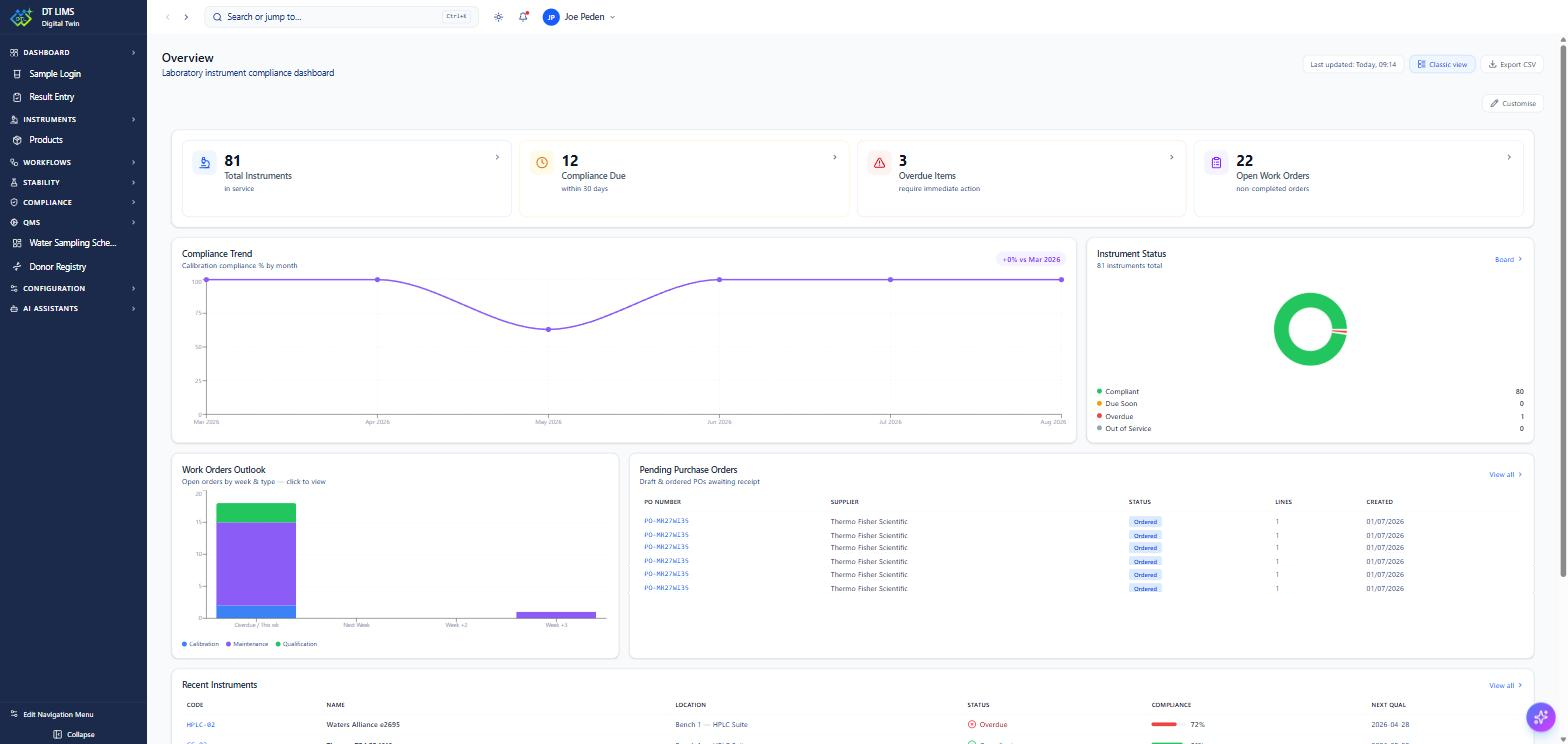
An instrument register with component trees, usage counters, calibration and maintenance scheduling, and a status board that shows an overdue instrument before it is used.
Methods and specifications
Versioned methods with their validation state, specification sets per product and matrix, and SOP version pinning so a result records the procedure actually in force.
Reporting and certificates
Twenty-eight report and certificate templates, electronically signed on issue, with the signed PDF hashed so the copy a client holds can be proven authentic.
Users, roles and audit
Granular role permissions, per-action signature policy, and a tamper-evident audit trail filterable by user, action and entity with CSV and PDF extraction for an inspector.
Walk one of your own workflows through it
Forty-five minutes, screen-shared, with the person who built it. Bring a real SOP or method and we will model it live.